
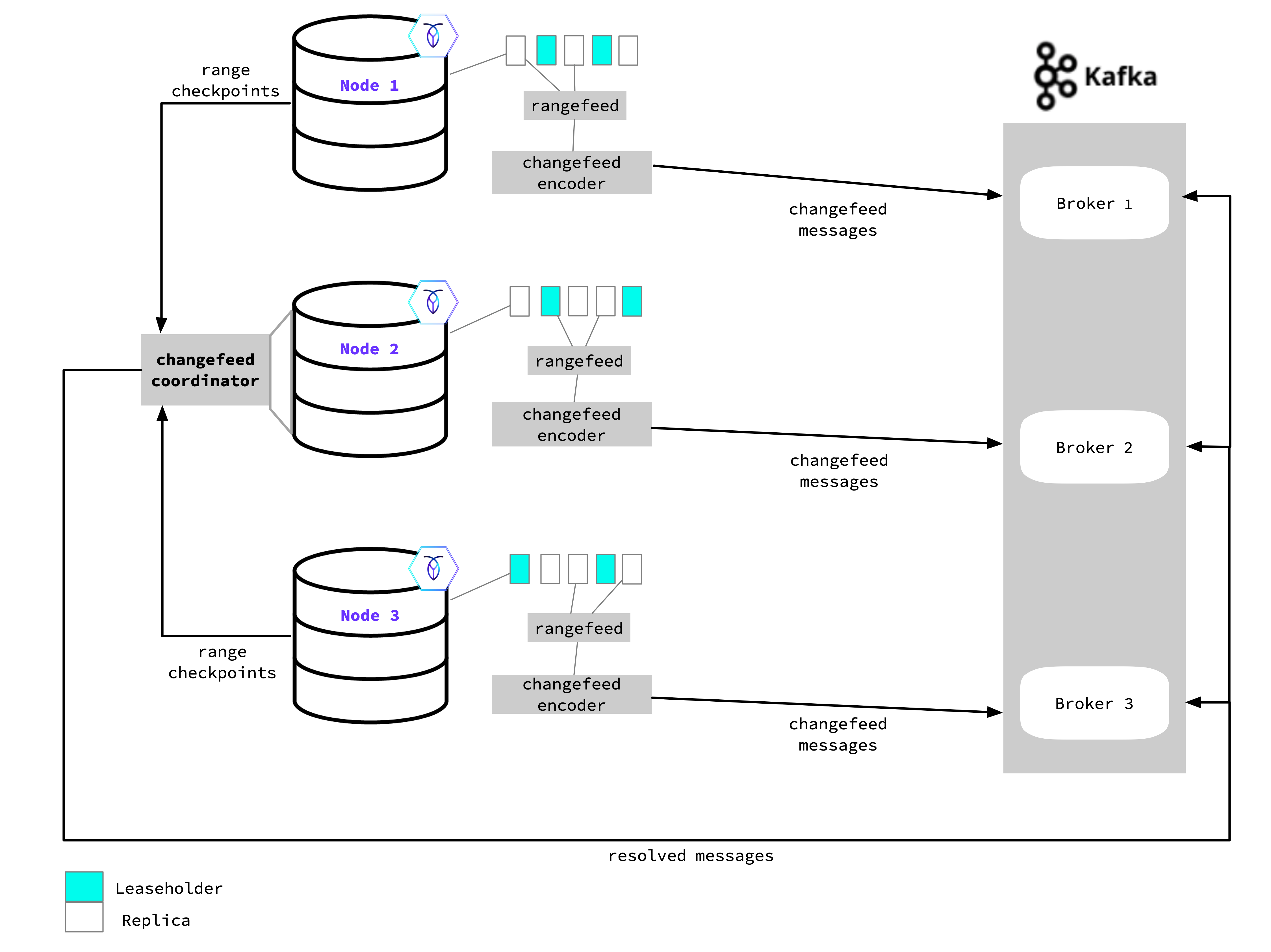
resolved specified when a changefeed is started, the coordinator will send the resolved timestamp (i.e., the high-water mark) to each endpoint in the sink. For example, when using Kafka this will be sent as a message to each partition; for cloud storage, this will be emitted as a resolved timestamp file.
As rows are updated, added, and deleted in the targeted table(s), the node sends the row changes through the rangefeed mechanism to the changefeed encoder, which encodes these changes into the final message format. The message is emitted from the encoder to the sink—it can emit to any endpoint in the sink. In the diagram example, this means that the messages can emit to any Kafka Broker.
If you are running changefeeds from a multi-region cluster, you may want to define which nodes take part in running the changefeed job. You can use the execution_locality option with key-value pairs to specify the locality requirements nodes must meet. See Job coordination using the execution locality option for detail on how a changefeed job works with this option.
See the following for more detail on changefeed setup and use: