
ST_Disjoint(A, B) returns true if the shapes do not share any of the same space — that is, if no point in the set that comprises A is also a member of the set of points that make up B.
ST_Disjoint works on the following spatial data types:
ST_Disjoint does not make use of spatial indexes.This function is the inverse of
ST_Intersects.Examples
The screenshots in these examples were generated using geojson.io, but they are designed to
showcase the shapes, not the map. Representing
GEOMETRY data in GeoJSON can lead to unexpected results if using
geometries with SRIDs other than 4326 (as shown below).True
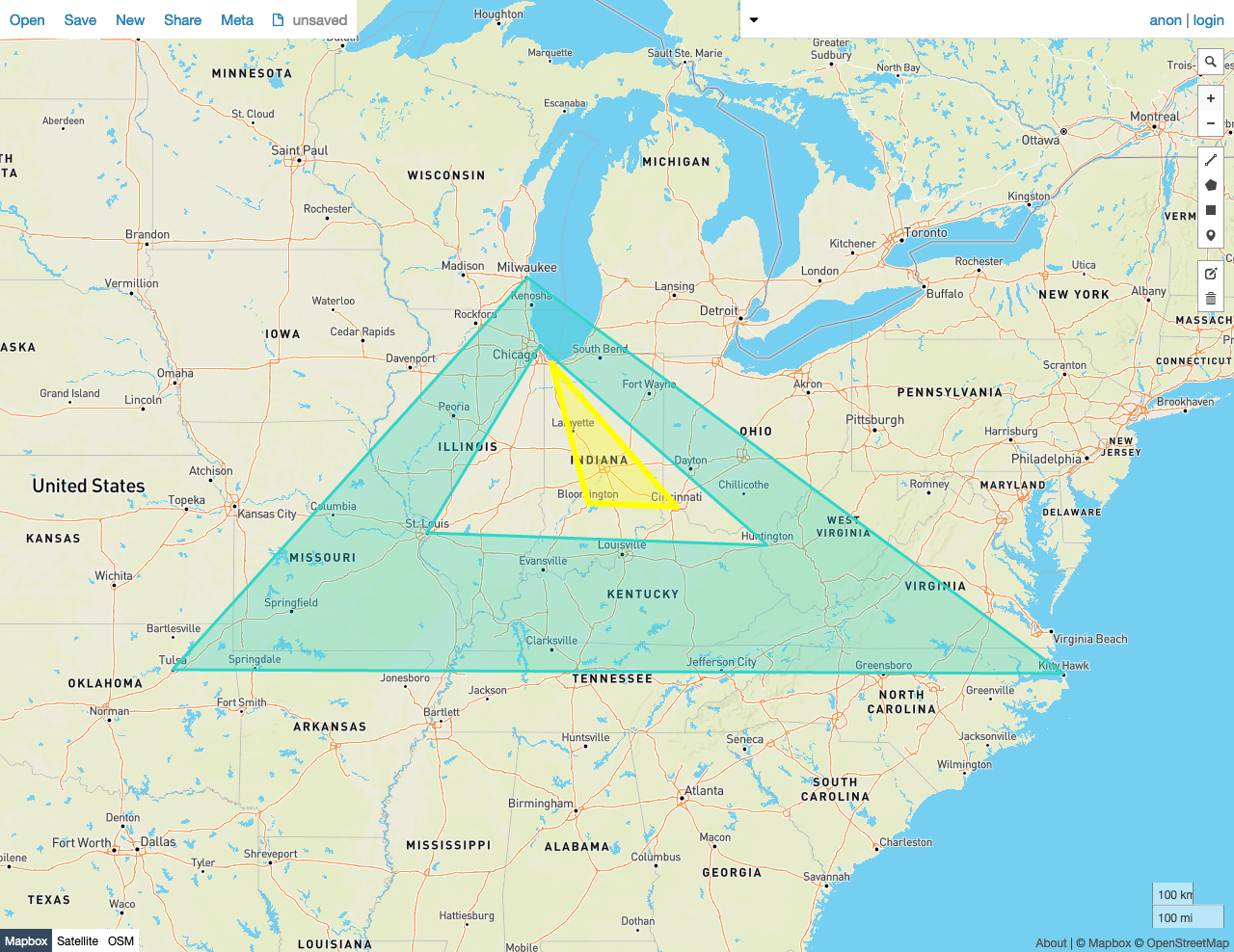
In this example,ST_Disjoint returns true because:
- No Point in the set that comprises Polygon A is also a member of the set of points that make up Polygon B.
False
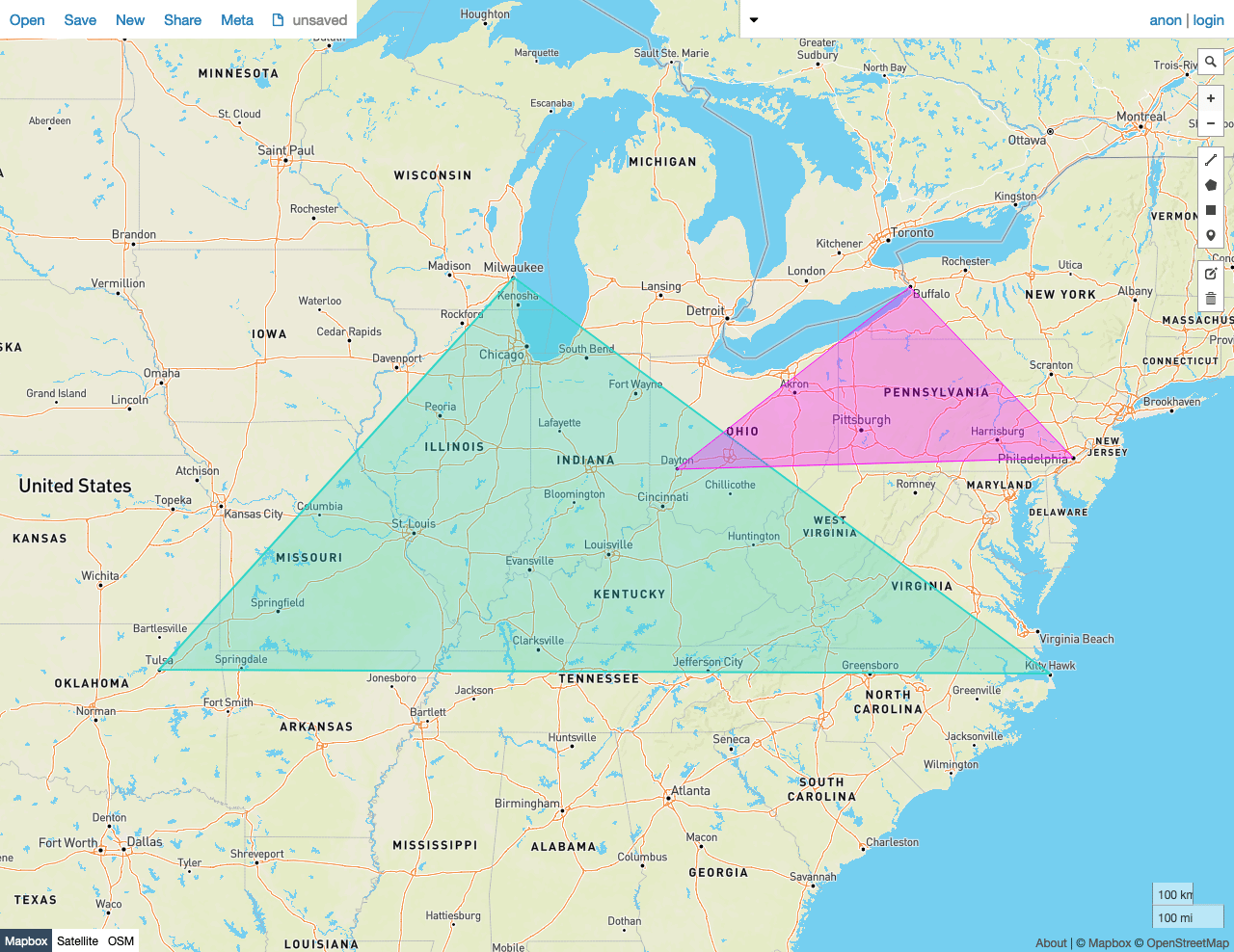
In this example,ST_Disjoint returns false because:
- Many Points in the set that comprises Polygon A are also members of the set of points that make up Polygon B.
See also
- Spatial and GIS Glossary of Terms
- Spatial indexes
- Spatial functions
ST_CoversST_CoveredByST_ContainsST_WithinST_IntersectsST_CoveredByST_CoversST_EqualsST_OverlapsST_TouchesST_ConvexHullST_Union- Migrate from Shapefiles
- Migrate from GeoJSON
- Migrate from GeoPackage
- Migrate from OpenStreetMap
- Introducing Distributed Spatial Data in CockroachDB (blog post)